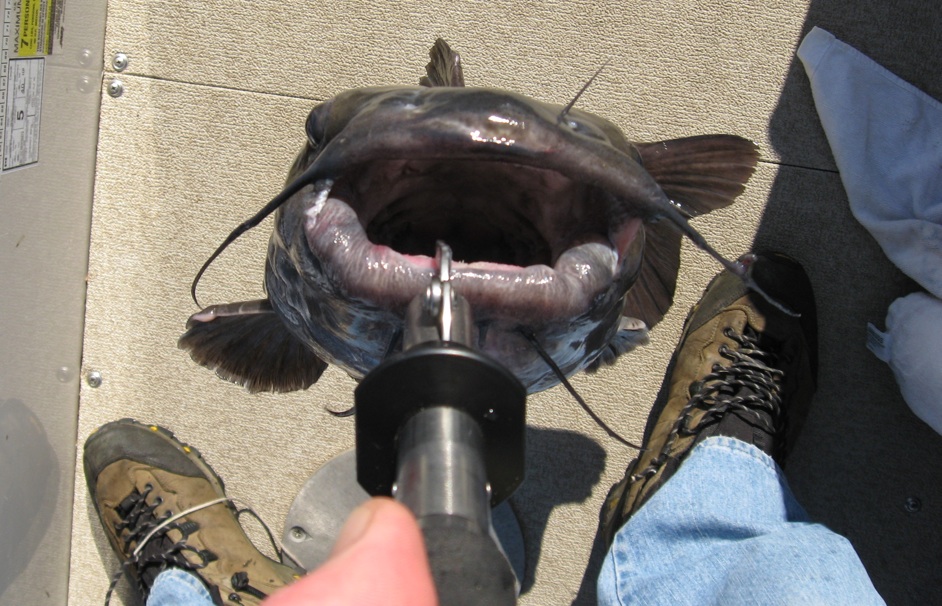
Matthew Schoell entered the world of catfish by accident.
He caught his first catfish in the Wethersfield Cove, May 2001.
"I was attempting to catch carp," he said.
After pulling in a channel catfish, and landing another, he was hooked.

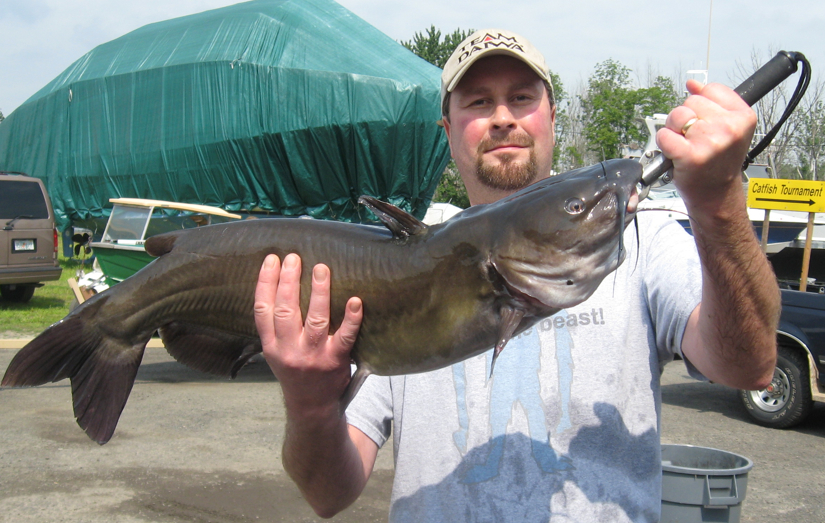
The largest is a 14.25 pound channel catfish that happened to nab him first place in the 13th annual Portland Riverside Marina Catfish tournament in 2008.
"The pulling power of a fighting catfish is like a tow truck under water," said Matt Schoell.
Schoell finds the sport close to home, inexpensive and fun. He's learned much about the river, habitats, preferred bait, and about catfish around the world.
"Many people don't even realize how many are out there," he says. "In my opinion, they are an underutilized resource. People catch them accidentally as a by-product of trying to catch a striper or bass."
He admires their tenacity. This man knows his fish. Schoell is a member of www.ctfisherman.com, an online community of passionate fishing devotees.
Catfish like flowing water. When the water flows hard during high river currents after heavy rain, they move into coves and backwater areas or head to the non-channel side of the river, Schoell has learned. They live from Massachusetts near their migration, Turners Fall dam. The fish are found all the way down to where brackish water mixes with fresh south of Deep River.
(Brackish water is a mixture of salt and fresh water and that's where the white catfish are; they can tolerate the salt water mix more than the channel catfish.)
There is a seasonal migration, for instance, when the water rises above 45 degrees, Then the catfish leave their wintering holes, places 40 to 50 feet deep.
(Schoell has seen these habitats using an Aquaview, a diving camera, which he lowers down into the water to see catfish where they live.)
"In the winter the water does tend to be a little cleaner," he admits.
Yet he's caught catfish year round.
The largest (so far) is a 14.25 pounder that happened to win first place in the 13th annual Portland Riverside Marina Catfish tournament.
"I think there are bigger ones out there," he said.
The state record happens to be 29, nearly 30 pounds, for a cat that came out of a lake.
"That one was probably a bucket biologist who introduced them (that's a term for somebody who shouldn't be doing it, they introduced catfish into different lakes), notes Schoell.
"Channel catfish are fine-tuned hunting machines," he notes. "They can hunt down prey in open water or feed on carrion off the bottom."
Monster Catfish: True Tales
So what about those "monster cats" reported to lurk at the bottom of Connecticut River?
"The 'monster catfish" theory is probably an innate fear of people who have seen catfish in other countries and have seen how big they really can get," said Schoell, who works as a senior loss control consultant by day. "They don't get to those proportions up here because of the growing season, their metabolism and that they eat less in the winter. A big catfish can appear monster-like, compared to a three-pound bass."

People are afraid of the catfish whiskers, which are actually sensory organs.
"There are no poisonous features on a catfish. They have three barbs, one each on the pectoral fins and one on back which would be considered the dorsal fin. Once they come out of the water they spin, and one has to watch them. The barbs dull with age. They have no poisonous glands, that's a misnomer."
"Catfish have what we call a lateral line where they can sense vibration. In Asia, they are looked to for hundreds of years as detectors of earthquakes because they can feel the vibrations using the lateral line."
So do monster catfish exist? Schoell has done his fieldwork.
"The Amazon is the largest drainage basin in the world; so massive it surpasses the Mississippi, the Nile, and other major rivers. It's 10 times bigger than them all together. That's where they have red-tailed catfish, and they don't know how big they can get."
There are also catfish in China called the Mekong catfish and they can weigh more than 600 pounds.
"European catfish are called Wels catfish; they are highly predatory. This species has been blamed for attacks on people during spawning season when people swimming nearby."
During breeding season the male will sit on the nest and guard the eggs.
"Anything that comes nearby is going to get bitten. These Wels catfish are protecting their fry or baby fish, and are pretty big and aggressive," he said.
(Yes, there are stories of finding human body parts being found inside of them.)
When The Sun Goes Down
 During the summer in New England, the ideal time to catch catfish is at dusk, when there is less boat traffic. The river calms.
"And the fish probably let their guard down a little bit," he notes and adds that he has had success using dead bait as opposed to freshly frozen, such as sunfish, eels or dace.
In Schoell's opinion the channel catfish are the "most highly developed game fish in North America, based on their sensory abilities."
He would like to see more respect for channel catfish in general.
"I don't expect everyone to find it fun," he notes. "I would like to see some limits on how many catfish can be taken per day, there are no limits on channel catfish currently in the Connecticut River." He would suggest not keeping anything more than 10 pounds because they do build up more toxins, PCBs, the longer they live.
"Catfish have incredible sensory detection abilities, including electroreception (the biological ability to perceive electrical impulses), like sharks. They are a worthy fish."
Connect To Community
The online community of www.ctfisherman.com started in 1999 as a place to display fishing photos. In 2001, a public message board was launched (originally a place for Connecticut freshwater bass anglers to share reports). The site has evolved into a community for all who love fishing. In 2007, it changed from a free public site to a subscription-based site for members only. (A free fishing discussion forum requires no subscription.)
Publisher Mitch Passero of Stamford, Connecticut, along with help from volunteer moderators, keeps the site lively and informative.
Gone Fishin'
A printed version of the Connecticut DEP Angler's Guide can be obtained anywhere you can purchase a fishing license or call (860) 424-3474. A PDF version is available online at www.ct.gov, which also offers a complete rundown of freshwater and saltwater fishing information.


